
Published October 6, 2026
Spring storms roll through Middle Tennessee every year, and a few minutes of hail can leave dozens of small dents across a vehicle. The damage is easy to underestimate, because hail dents are shallow and almost invisible until the light hits them at the right angle.
Here is how to check your vehicle after a storm, what to document, and how the repair works.
1. Check the vehicle in good light
Hail falls straight down, so the roof, hood and trunk lid take most of the hits. Pillars, the tops of doors and fenders and the side mirrors are next.
- Look in daylight, ideally on an overcast day or in open shade.
- Crouch down and look along each panel at a low angle instead of straight at it. The reflection bends around each dent.
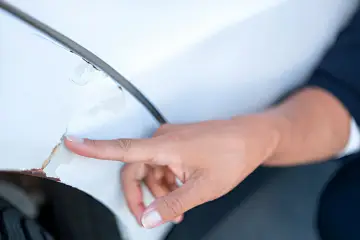
- Check for cracked or chipped paint inside the dents, and for damage to trim, lights and mirror housings.
2. Photograph the damage
Good photos help with both the insurance claim and your estimate request.
- One wide photo of each side of the vehicle, plus the roof if you can safely get a view of it.
- Low-angle photos along the hood, roof and trunk lid that show the dents in the reflection.
- Close-ups of any chipped or cracked paint.
- The date of the storm and where the vehicle was parked.
3. Decide how to pay
Hail is usually handled under the comprehensive part of an auto policy, not collision coverage, and your deductible applies. If the damage is light, it may cost less than the deductible to repair, in which case paying yourself can make sense. If you file a claim, add the claim number to your estimate request. Our insurance claims guide explains how the process works.
4. How hail dents are repaired
Paint intact
Many hail dents are shallow, with the paint unbroken. Dents like these can often be worked back into shape from behind the panel, keeping the original finish.
Paint cracked or chipped
Larger hail can crack the paint or leave sharp dents. Those panels are reshaped, primed, refinished and blended so the color matches the rest of the vehicle.
A vehicle with heavy damage across one panel may need that panel repaired and refinished as a whole. We look at each panel and explain the options. Read more about dent removal and paint refinishing.
Don’t forget falling limbs
Storms that bring hail often bring wind, and falling branches leave larger dents and scratches than hail does, sometimes with broken glass or trim. Treat that damage the same way: photograph it, check your policy and send photos with your estimate request.
Get started
Send your photos with an estimate request and we will contact you about next steps. Our shop is at 2799 Foster Ave in Berry Hill, and we repair vehicles for drivers from across Nashville and Middle Tennessee.
Frequently asked questions
Does car insurance cover hail damage?
Hail is usually covered under the comprehensive part of an auto policy, not collision coverage. Your deductible applies. Your insurer can confirm how your policy handles it.
Can hail dents be fixed without repainting?
Often. Many hail dents are shallow with unbroken paint and can be worked back into shape. Dents that cracked or chipped the paint, or sit on sharp body lines, usually need refinishing.
Should I wait to repair hail damage?
If the paint is intact, waiting does not usually make the dents worse, but cracked or chipped paint can rust. Insurers may also have time limits for reporting a claim, so check your policy.
More from the blog
 October 31, 2026What to Do After a Car Accident in NashvilleA checklist for the scene, the insurance claim and the collision repair.
 October 30, 2026How Small Body Damage Affects Resale and Lease-Return ValueWhy small damage matters at trade-in, sale or lease turn-in, and what to fix first.
 October 27, 2026Plastic Bumper Repair or Replacement: How to DecideBumper covers, hidden damage behind them, and when to repair or replace.